IB PRIMARY SCHOOL
Overview
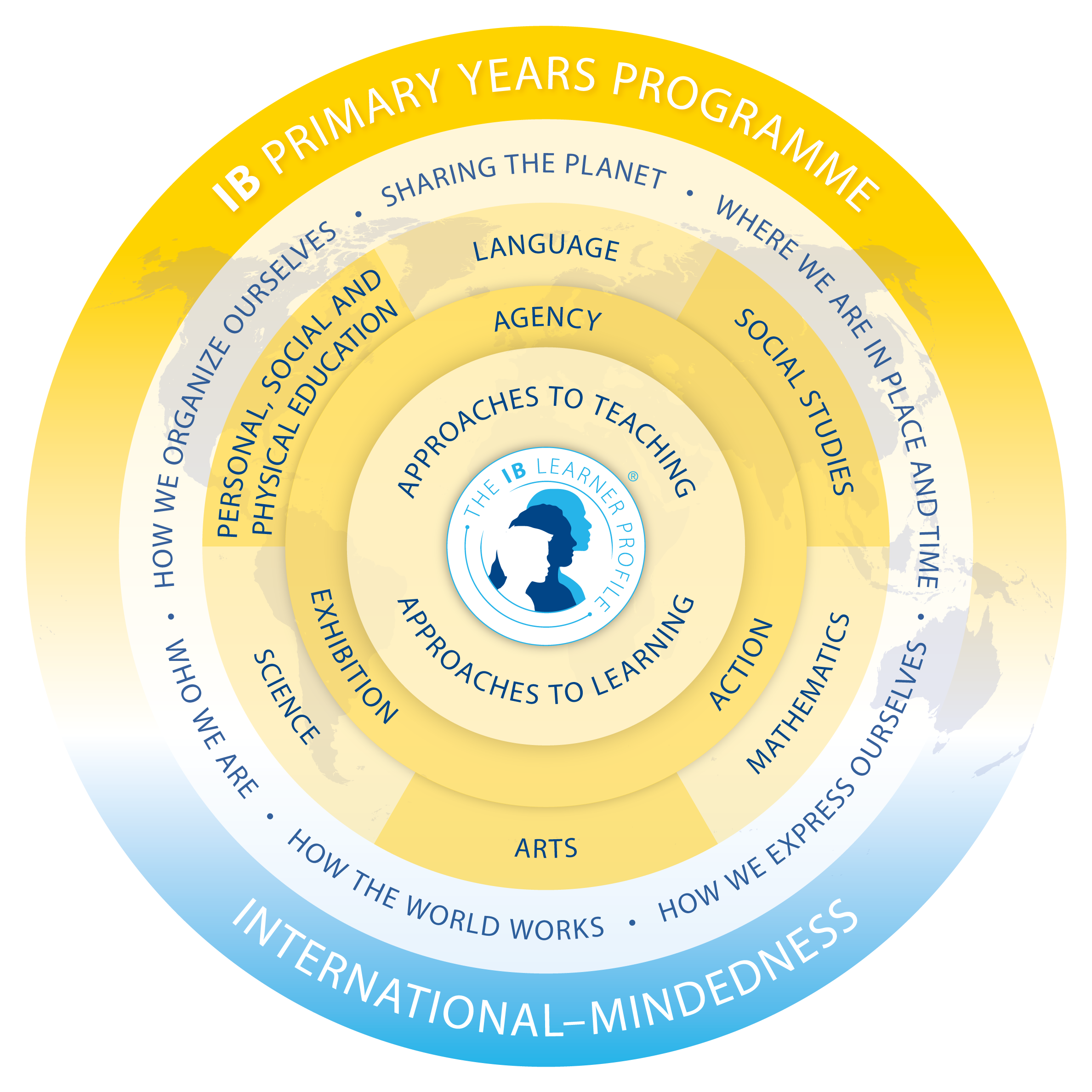
The IB Primary Years Programme (PYP) is a transdisciplinary framework that emphasises authentic learning experiences. It encourages students to connect knowledge, skills, and personal attributes fostering a holistic approach to education. The framework prioritises student agency, where learners take responsibility for their own learning, engage in inquiry, and reflect on their progress. Through this process, PYP students develop knowledge, conceptual understanding, skills, and the attributes of the IB Learner Profile, empowering them to make a positive impact in their lives and communities.
“I am excited to have the privilege of working, growing, and learning with the staff, students, and parent community of Sunway International School Iskandar Puteri. I look forward to forming meaningful connections and sharing my enthusiasm for learning with all of you!”
IBPYP Framework

IB Learner
Central to all IB programmes, the IB Learner Profile presents the educational mission of IB as a set of learner or graduate attributes that are important for life and learning in the 21st century.
SIS students can progress smoothly due to the IB Learner Profile attributes aligning well with Ontario’s high school curriculum expectations, thus shortening their secondary pathway or duration of study toward an IB Diploma qualification.
IB Learner Profile
- Inquirers
- Knowledgeable
- Thinkers
- Communicators
- Principled
- Open-minded
- Caring
- Risk-takers
- Balanced
- Reflective
Transdisciplinary Themes
The PYP framework at our private primary school is organized around six transdisciplinary themes, including
- Who We Are
- Where We Are in P lace and Time
- How We Express Ourselves How the World Works
- How We Organize Ourselves Sharing the Planet
These themes guide learning across subjects and encourage global-mindedness.
Approaches to learning
Approaches to Learning (ATL) are skill sets outlined by the IB to help students understand their own learning process and maximize their potential. These skills are explicitly developed across all subject areas.
- Communication
- Critical and Creative Thinking
- Social (Collaboration)
- Research (Information and Media Literacy)
- Self-management
SUBJECTS
Homeroom teacher teaches:
- Language Arts
- Mathematics
- Inquiry
- Phonics
- Science
- Social Studies
Specialist teacher teaches:
- Mandarin
- Malay
- Physical Education
- Swimming
- Art
- Music
- Drama
ASSESSMENTS
Assessment in the PYP supports student growth and provides meaningful feedback for students, teachers, and parents. We use a balance of formative assessments (ongoing checks for learning) and summative assessments (end-of-unit evaluations), alongside student self-reflection.
Students receive four report cards each year:
- Two progress reports showing achievement against grade-level expectations.
- Two semester reports based on summative assessments, using a Level 1–4 scale.
All report cards include an effort scale to encourage motivation and ownership of learning.
Primary School Framework
The Primary School fosters the development of knowledge, skills and conceptual understanding through inquiry-based teaching and learning. SIS places great emphasis on building foundations in key areas that will help unlock each student’s potential. Through engaging classroom experiences, theme weeks, special events, and enriching field trips which include excursions, students in the Canadian Primary Programme make meaningful real-world connections as they learn and grow.
Literary, numeracy, global competencies and 21st century skills.
Development of students’ self-identity as lifelong learners
Effective teaching practices that motivate student learning.
Carefully selected resources that reflect student interest and diversity.
Continuous formative assessment to improve student outcomes.
THREE STYLES OF ASSIGNMENTS
- Helps teachers determine students’ knowledge and skills so they can plan appropriate teaching and learning activities.
- Occurs before and during learning.
- Teachers gather information about what students already know and what they need to learn next.
- Develops students’ capacity to be independent and autonomous learners.
- Students monitor their own progress, set goals, and reflect on their learning.
- Encourages metacognition (thinking about thinking).
- Occurs at the end of a learning period.
- Used to evaluate student achievement of curriculum expectations.
- Often involves tests, assignments, or performance tasks.
- Informs reporting and helps determine student progress.
TEACHING & LEARNING
STRATEGIES
Assessment data drive institution
All curriculum units and daily lessons are planned to incorporate a variety of teaching strategies to address student varied learning styles.
- Guest Speaker
- Concept Mapping
- Jigsaw
- Debate/Roleplay
- Lab Report & Investigation
- Presentation
- Field Trip
- Multimedia Production
- Class Discussion
- Quiz/Test/Exam
- Think-Pair-Share
- Direct Instruction
- Brainstorm/Discussion
SCHOOL HOURS
| Monday to Thursday | 8:00 am to 3:00 pm |
|---|---|
| Friday | 8:00 am to 12:00 pm |