IB MIDDLE SCHOOL
Overview
The International Baccalaureate Middle Years Programme (IBMYP) emphasizes intellectual rigour and holistic development. It encourages students aged 11 to 16 to make practical connections between their studies and the real world, preparing them for success in further study and in life. The IBMYP aims to develop active learners and internationally minded young people who can empathize with others and pursue lives of purpose and meaning.
In IBMYP, students are assessed entirely by the coursework undertaken throughout the semester. Assessment outcomes provide teachers with information on where students are in terms of achieving curriculum expectations and allow teachers to guide students with alternative learning strategies towards achieving their learning objectives.

"Welcome to our Middle Years Programme. Our MYP (G6–10) bridges the PYP and DP/CP, developing academic excellence alongside real-world skills and character. Through Personal Projects, community engagement, MUN, science fairs, and leadership learning, our students grow into open-minded, caring, and respectful lifelong learners. We're so happy to have you join our thriving community!"
IBMYP Framework
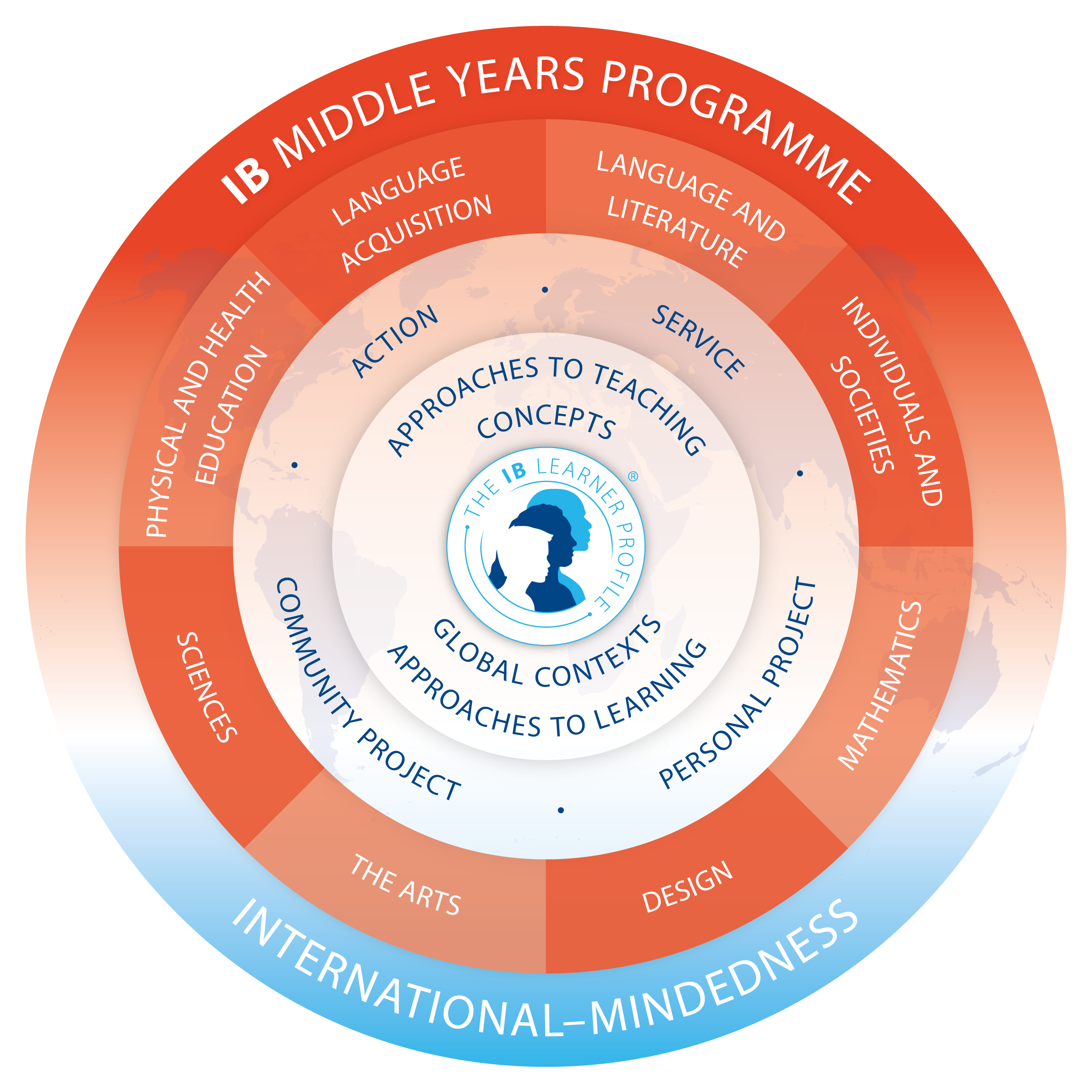
IB Learner
Central to all IB programmes, the IB Learner Profile presents the educational mission of IB as a set of learner or graduate attributes that are important for life and learning in the 21st century.
SIS students can progress smoothly from Grade 10 into IBDP due to the IB Learner Profile attributes aligning well with Ontario’s high school curriculum expectations, thus shortening their secondary pathway or duration of study toward an IB Diploma qualification.
IB Learner Profile
- Inquirers
- Knowledgeable
- Thinkers
- Communicators
- Principled
- Open-minded
- Caring
- Risk-takers
- Balanced
- Reflective
Approaches to Learning (ATL)
ATL are skill sets outlined by the IB to help students understand their own learning process and maximize their potential. These skills are explicitly developed across all subject areas.
- Communication
- Critical and Creative Thinking
- Social (Collaboration)
- Research (Information and Media Literacy)
- Self-management
Subjects
To fix it inline, add style="list-style-type: none; padding-left: 1.25rem;" to every innertag to hide the default browser circles and fix the spacing.
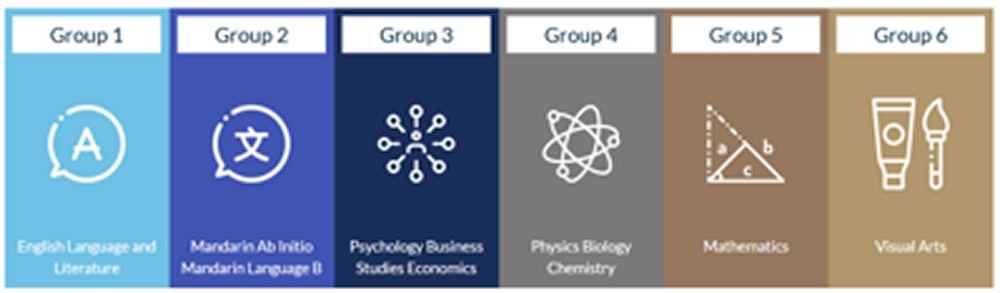
The IB Middle Years Programme (MYP) provides the framework for our curriculum, which comprises eight subject groups:
- Language & Literature
- English
- Mandarin
- Malay
- Language Acquisition
- English
- Mandarin
- Malay
- French
- Individuals & Societies
- Integrated Humanities
- History
- Geography
- Sciences
- Biology
- Chemistry
- Physics
- Integrated Science
- Mathematics
- Standard
- Extended
- Arts
- Visual Arts
- Drama
- Music
- Physical & Health Education
- PE
- Swimming
- Design
- Digital Design
- Product Design
Service as Action
- A foundational element of the IBMYP that seeks to develop students as caring members of the community that make positive contributions.
- Students in grades 6 to 10 take what they learn in class and apply them to real world situations through action, not only as part of Service as Action, but also as part of their Units of Study.
- Teachers support students in developing their ideas and putting them into action.
- Students develop their school-projects with support of students as well as the school as a whole.
ASSESSMENTS
Personal Project
- Grade 10 students complete a Personal Project, a self-directed study they work on in their own time, based on their choice of topic and communication mode.
- The project is designed for students to reflect on and demonstrate all skills, attitudes, and knowledge acquired over their MYP grades and apply them in developing new and deeper understanding in an area of interest.
- Students begin the process in the middle of Grade 9 and complete the final project in Grade 10 (with an exhibition of all students' work that is usually held in August/September each year)
Middle Year Programme Certificate
- Assessment total min 28 points out of 56
- Min 3 points out of 7 on each eAssessment
*eAssessment(1.5-2 hours)
- Language & Literature
- Language Acquisition
- Maths
- Science
- Individual & Societies
- Interdisciplinary Learning
Service in Action
(Community Service)
ePortfolio for one of:
- Arts,
- Physical Education or
- Design
Personal Project
SUBJECTS

English – Literacy Focus
The literacy skills students learn are more than just reading and writing; they learn how to communicate in society. As the school prepares them for the future, students learn how to use the English language to communicate effectively, think critically, and make meaningful connections with individuals and communities.

Mathematics – Numeracy Focus
Mathematics in Middle School goes beyond numeracy skills. Students learn how to apply their knowledge and skills across other subject areas. In line with STEM education, students will also develop transferable skills applicable to real-world contexts.

Science & Technology – Empirical Methods and Innovation
Science and technology go beyond understanding concepts covered in a textbook. Students learn to relate the knowledge they gain to society and the environment, while also developing the skills, strategies, and habits of mind needed for scientific inquiry and technological problem-solving.

Social Studies – History, Geography
The knowledge, understanding, and attitudes students develop in social studies, history, and geography nurture them into becoming informed citizens who value an inclusive society. The curriculum helps them develop skills to solve problems and communicate ideas, decisions, and thoughts related to real-life developments and events.

Health & Physical Education – Personal Wellness
The curriculum helps students develop mental health and wellbeing, physical and health literacy, and movement competence that support healthy, active living and character development. Students gain kinesthetic learning opportunities, develop movement skills, and apply movement concepts and strategies in games, sports, dance, and other physical activities.

Languages – Malay, French
The study of additional languages supports the development of language skills and cultural awareness. By learning different languages, students discover unique forms of expression across cultures and learn to communicate with communities both locally and globally.

The Arts – Visual Art, Music, Drama/Dance
The Arts go beyond creative engagement and expressive participation. This subject nourishes and stimulates the imagination, giving students a wider range of tools and techniques to understand the world around them and express themselves in various artistic forms.
MIDDLE SCHOOL DEVELOPMENT FOCUS
- SIS teachers create powerful learning opportunities through an array of in-class and out-of-class activities. Students learn how to tackle real-world issues and are challenged to think creatively and critically
- SIS teachers introduce projects and coursework for students to learn how to work in groups as well as independently. Students develop responsibility for their own learning and are guided on how to actively seek new opportunities for learning and support.
- Assessments happen throughout the semester. This allows learning to be cumulative, current and consistent. Continuous assessments keep students up to date on their scholastic responsibilities.
- SIS provides extra assistance to students from other schools or different education systems. Teachers introduce to them the required learning skills and work habits, including the importance of:
- Responsibility
- Oraganisation
- Independent work
- Collabration
- Initiative
- Self regulation
SCHOOL HOURS
Grades 6, 7 and 8
| Monday to Thursday | 8:00 am to 3:20 pm |
|---|---|
| Friday | 8:00 am to 12:00 pm |
EXTRA-CURRICULAR ACTIVITIES
| Monday to Thursday | 3:30 pm to 4:30 pm |
|---|---|
| Friday | - |
